
Sandals (F17)
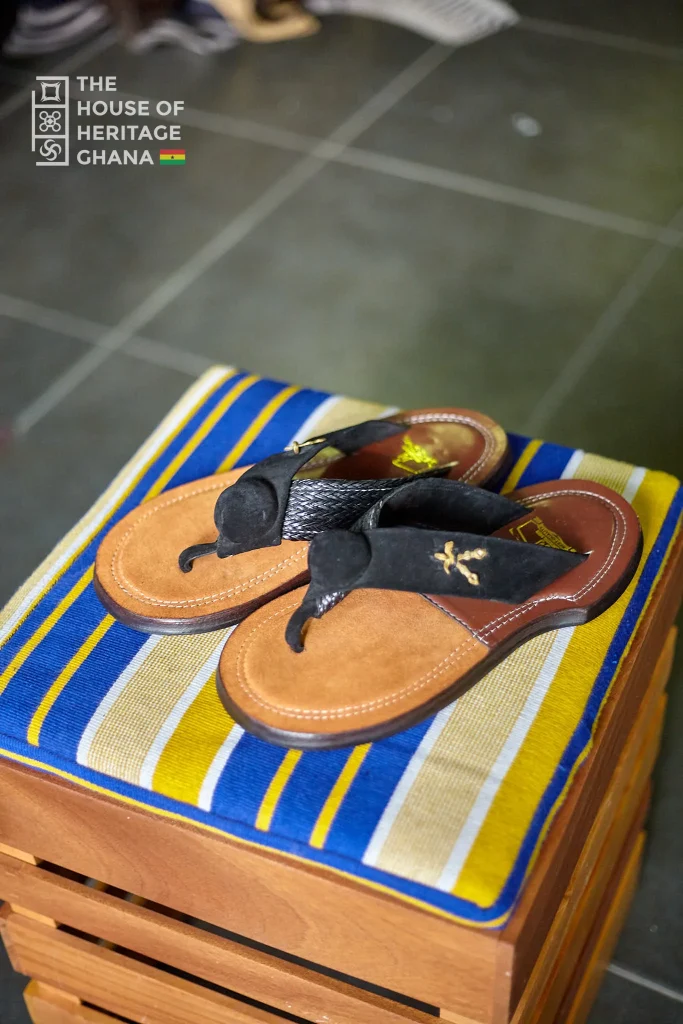
Commissioned for The House of Heritage Ghana. Available to purchase and by pre order Leather, suede and Akan Adinkra accents
Fabric (F28)

Fabric (F24)
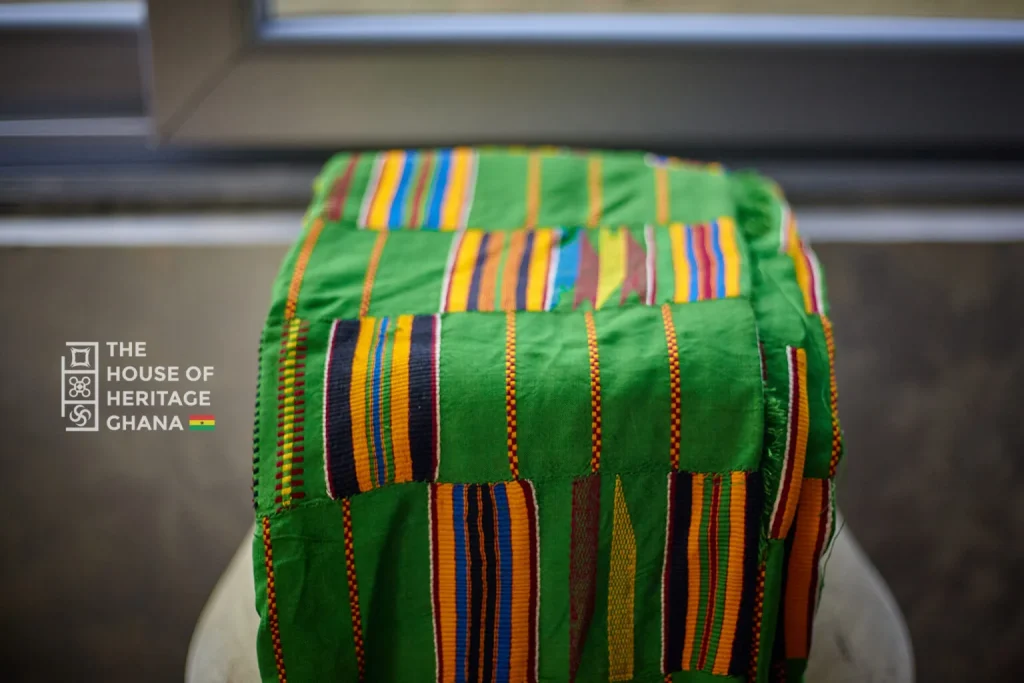
Ashanti Kente
Heritage 7 (H7)

Heritage wall art: Conversations Across Time Presented together, Hinmei see, Ga Samai, a traditional symbol representing the eyebrow, regardless of how long the beard grows, it cannot match the eye brow, and Bese Saka, Akan Adinkra, a traditional symbol representing the wealth of sacks of cola nuts, a form of barter and trade. Accessorized with […]
CLAY 5 (C5)
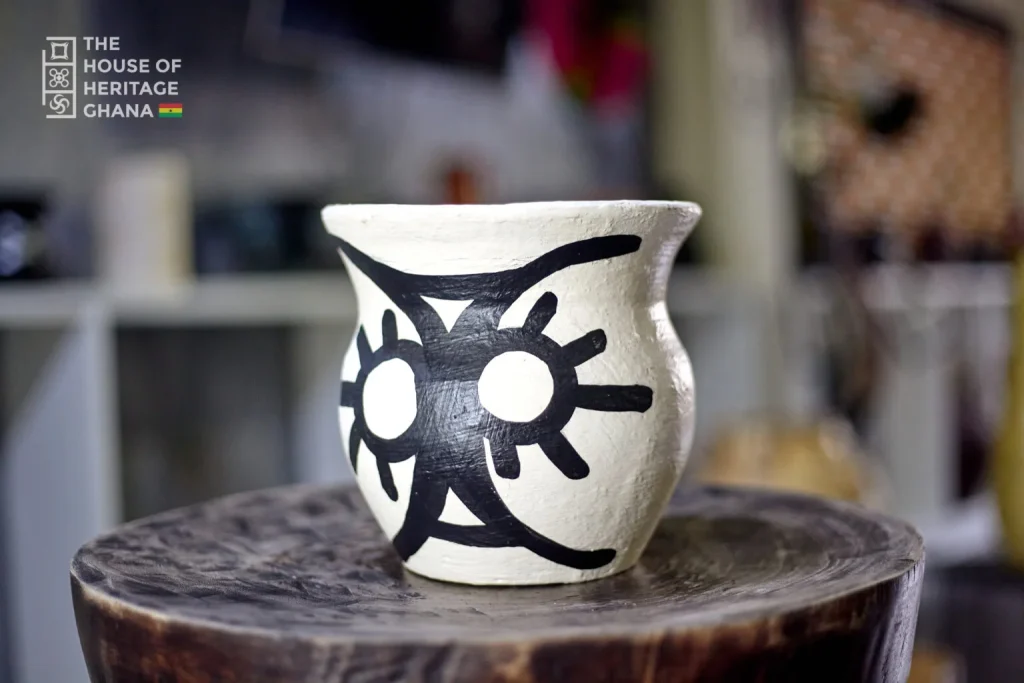
Adashi, Ga Samai, a traditional symbol, it marks paying of respects and/or a show of appreciation.
CLAY 13 (C13)
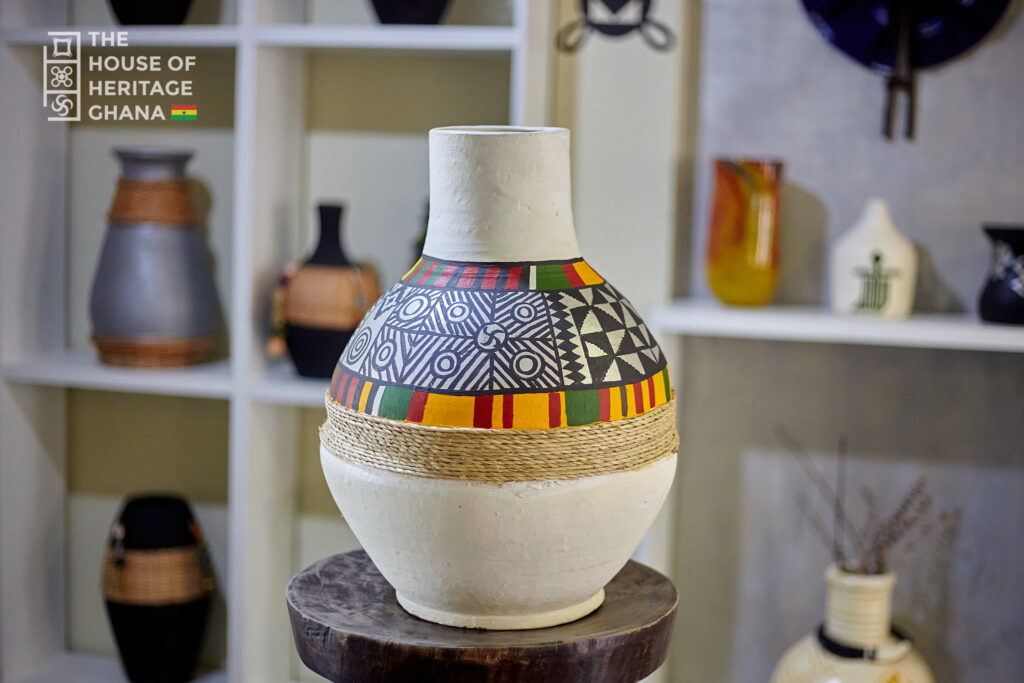
Fiayi, Ewe Dzesiwo, a traditional symbol said to originate from a myth that developed into a proverb represented in art form and referred to as a sword of authority or office of a leader. Special circumstances can compel the use of the royal sword/cutlass to fell a tree.
CLAY 18 (C18)
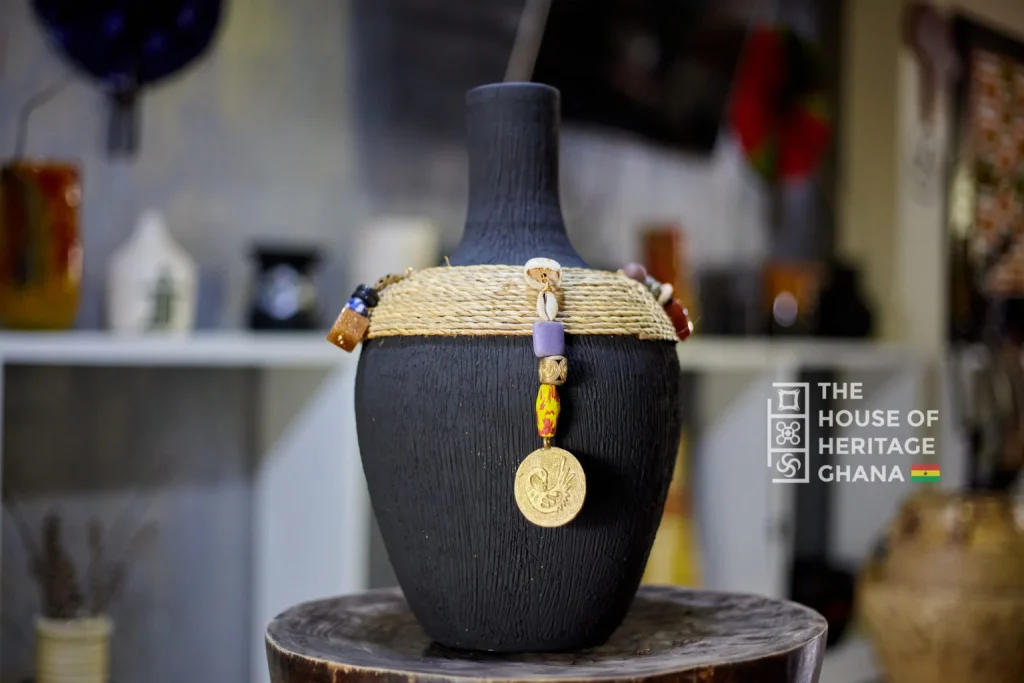
Accents – raffia, recycled glass beads and a re presentation of adinkra
CLAY 25 (C25)

Atoobi, Ga Samai, a traditional symbol, size notwithstanding, even a a little bird deserves respect.
CLAY 22 (C22)
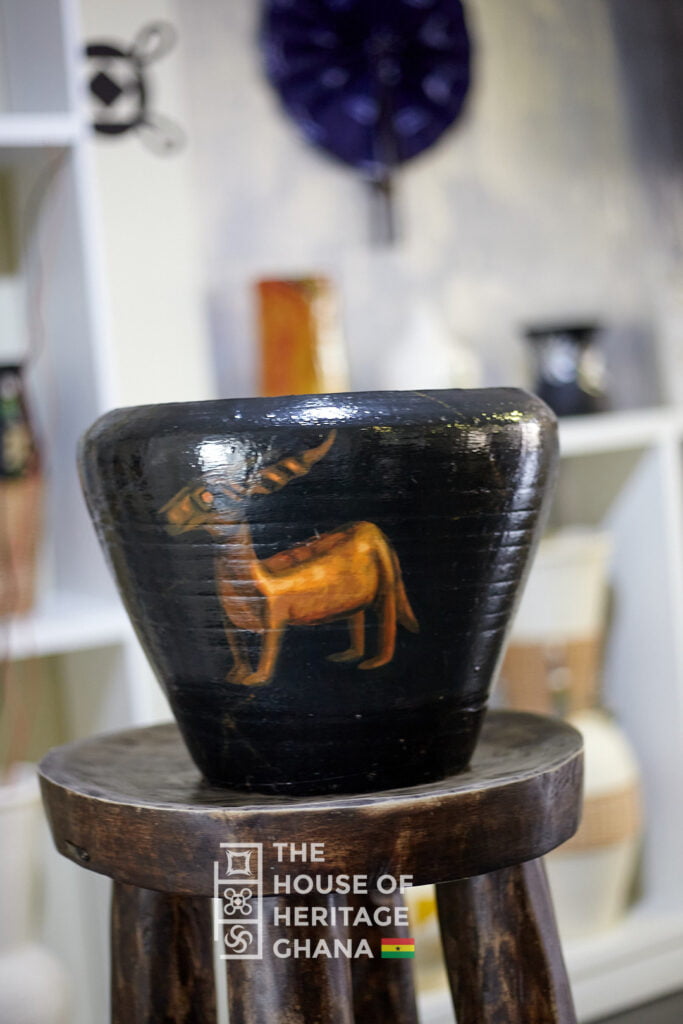
A hand painted representation of one of hundreds of decorative Akan gold weights used between 1400 and 1900, before paper currency was introduced. These miniature sculptures carved with detailed depictions of animals and people can be re presented as we have, on clay.
CLAY 24 (C24)
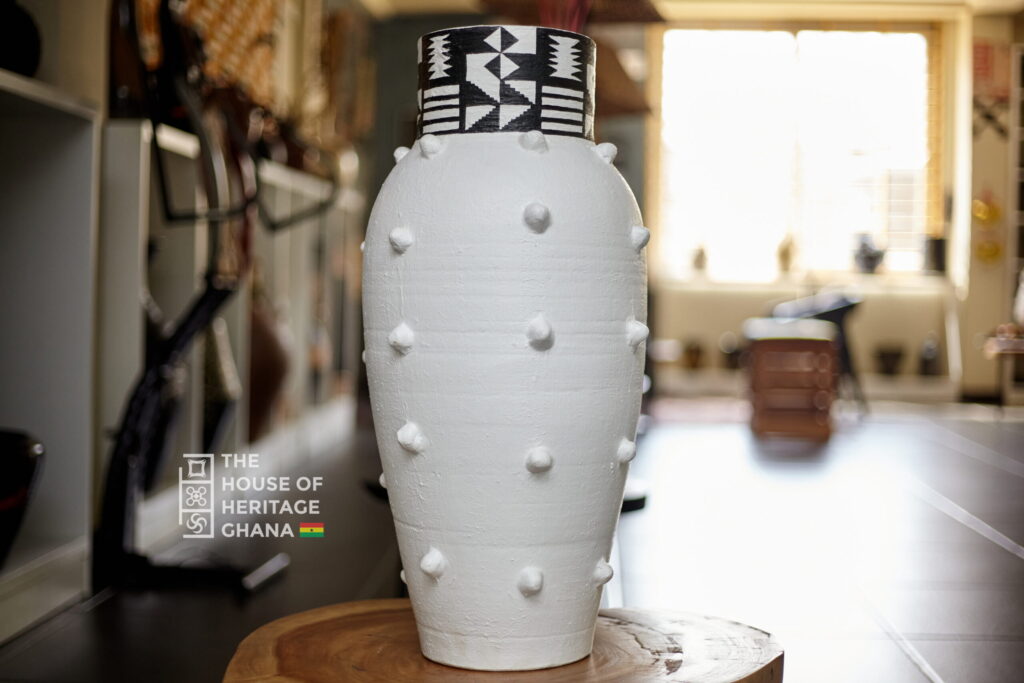
The Kuronti, one of a set of 4, the name in Akan Twi translates as ‘head of the town’. A title given to a sub chief. A ceremonial band and mark of leadership is hand painted in black, repeat patterns that can be found in kente cloths.